
For years, SEO was a game of rankings. Businesses invested in a website, wrote articles and optimised keywords with one familiar goal: appear at the top of Google to attract traffic and customers. But the arrival of AI platforms such as ChatGPT, Gemini and Google’s AI Overview is changing how the internet works, and changing it fast.
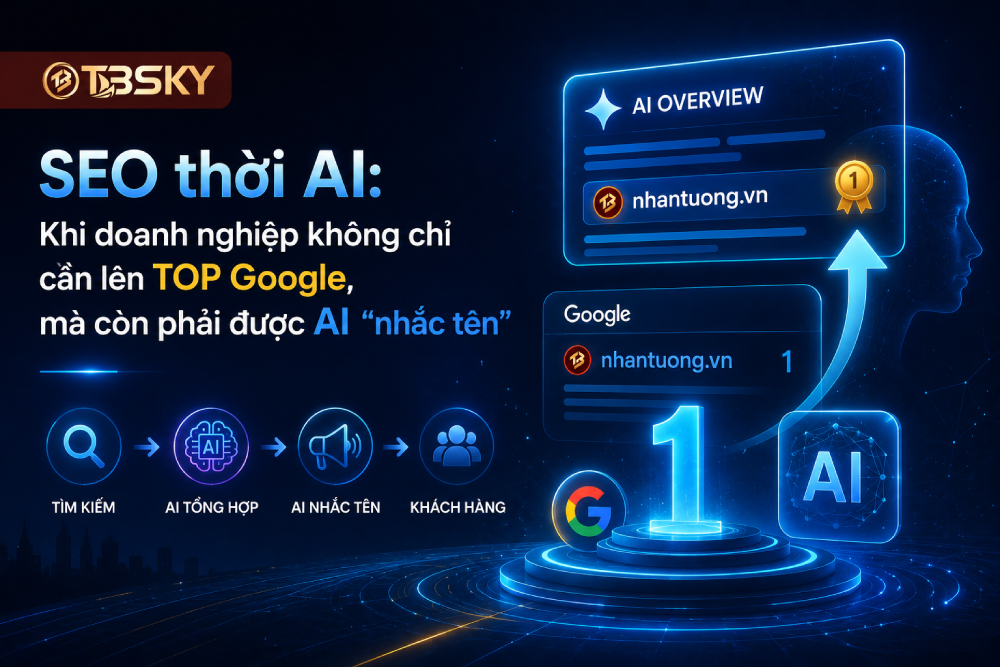
People now increasingly tend to “ask the AI” instead of going to look for information themselves. Where the common journey used to be opening Google, visiting several websites, reading and comparing, users now simply put a question and the AI assembles the answer for them. In many cases they no longer need to open many websites at all.
This change is creating a major shift in the SEO industry. A website is no longer purely somewhere to rank in search but is becoming a “data source” for AI to read, understand and draw into the answers it gives people.
That also means that if a business does not build a good enough body of content, the AI will not understand what the business does, will not understand what its core products or services are and, more importantly, will have no reason to recommend that brand to a user.
One of the most notable changes at present is AI Overview — Google’s AI-integrated search feature. Instead of only showing a list of websites, Google now assembles information itself and gives a direct answer on the search screen. The websites the AI chooses to cite gain a considerable advantage in credibility and in reaching customers.
This is regarded as an important turn in modern SEO. Businesses now compete not only for the top position on Google but for the chance to be “named” by the AI.
A practical example of this trend is the Nhân Tướng VN project, which T3SKY delivered and optimised for SEO. For the keyword “secure online face reading”, the website not only appears in position one on Google but is used directly by Google AI Overview as a reference source within the AI answer.
That is a significant signal in the age of AI search, because AI Overview does not work like traditional SEO. Google assesses not only keyword density or backlinks but the depth of the content, the data structure, brand consistency, the reliability of the information and the user experience on the website.
Put another way, being cited by AI Overview shows that the AI has “understood” what field that website belongs to and regards it as a source of sufficient quality to serve users.
This shift is also making many older SEO techniques ineffective. Backlink spam, keyword stuffing and mass-produced content with no depth are valued far lower than before. Modern AI favours content with genuine expertise, real experience and real value for the reader.
That is why SEO today is moving closer to the concept of GEO — generative engine optimisation. If traditional SEO means optimising for a search engine, GEO means optimising so that AI can read, understand, synthesise and recommend the business within answers generated by artificial intelligence.
As the internet shifts from “search-first” to “AI-first”, a website is no longer merely a marketing channel. It is becoming the business’s digital data infrastructure. A website with a good structure, clear content, complete data and a consistently presented brand will have far more chance of being chosen by AI in future.
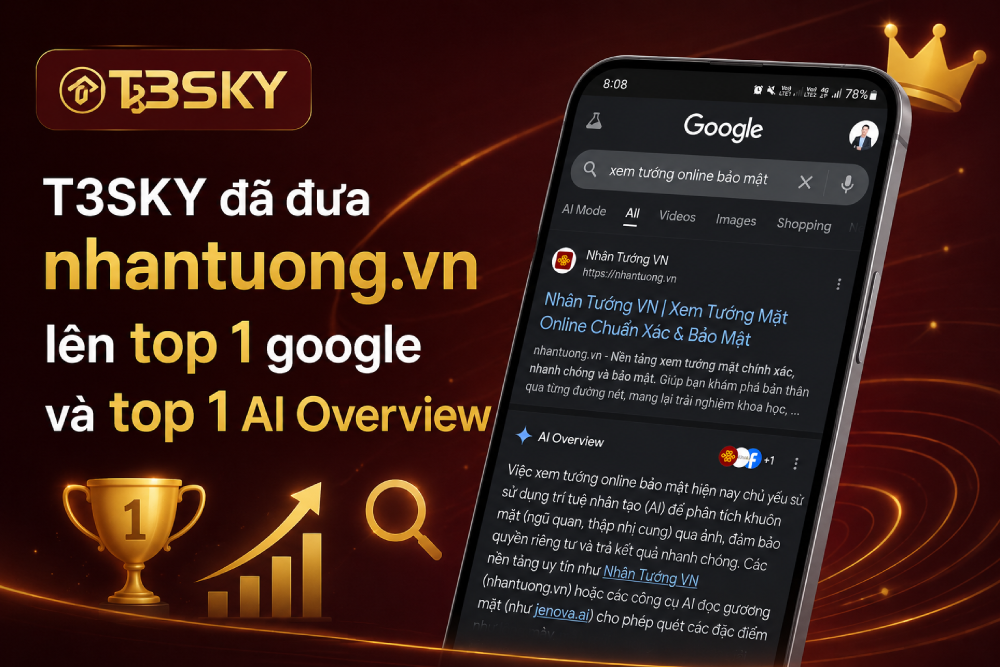
At T3SKY, SEO is no longer approached as “pushing keywords” as it once was. The team focuses on building semantic content systems, standardising brand entities, optimising website structure for AI and combining SEO and GEO with a long-term content strategy. The goal is not only to get a website to the top of Google but to help the business become a trusted data source in the era of AI search.
As AI increasingly becomes the new intermediary layer of the internet, the businesses that appear early in the AI data ecosystem will hold a considerable advantage in the digital competition of the years ahead.
