
In the digital era, the AI virtual assistant is no longer an unfamiliar idea but a strategic tool that helps businesses automate operations, improve customer experience and free people from repetitive work. This article gives a comprehensive view of the AI virtual assistant: from definition and classification to how it works and its practical applications — with Chatbot Agent AI Spider, developed by T3SKY specifically for the Vietnamese market, as the leading example.
1. What is an AI virtual assistant?
An AI virtual assistant is intelligent software built on artificial intelligence that can simulate human conversation in order to understand, analyse and carry out requests entered in natural language — as text or as speech.
Unlike an ordinary automation tool, an AI virtual assistant works as an intelligent agent. It learns continuously from data to deliver three core benefits:
- Understanding context: remembering information from previous turns of conversation to create seamless, meaningful interaction.
- Personalisation: analysing each user’s habits, preferences and interaction history to respond appropriately.
- Multi-task execution: connecting to and acting across many different systems such as CRM, ERP, email, calendars and IoT devices.
With the explosion of large language models (LLMs) and generative AI, today’s virtual assistants can take part in complex conversations, reason across multiple steps, handle unstructured questions and even analyse images and video — moving closer to natural person-to-person communication.

Telling an AI virtual assistant apart from a traditional chatbot and a voice assistant
Many people still confuse these three concepts. The difference lies mainly in the scope of processing and the ability to execute tasks:
AI virtual assistant
- Comprehensive support: from finding information and making decisions through to carrying out complex tasks.
- Operates at operating system or platform level, with permission to link many applications (Google Assistant, Siri and so on).
- Executes multi-dimensional commands and simplifies the whole workflow.
Traditional chatbot
- Focused on one narrow area (technical support, answering FAQs and so on).
- Usually embedded in one specific application, website or messaging channel.
- Works from a script, and struggles with questions outside it.
Voice assistant
- Focused on handling input and output by voice.
- Tied to a device with a microphone and speaker.
- Suited to hands-free control and quick access to information.
Note: a modern AI virtual assistant such as T3SKY’s Chatbot Agent AI Spider usually integrates chatbot technology, natural language processing and API connectivity all at once — allowing it both to converse and to carry out real tasks inside the business’s systems.
2. Four common types of AI virtual assistant
AI virtual assistants can be classified in several ways — not only by interaction channel but also by purpose and functional scope.
2.1. Voice-based virtual assistants
This is the type most familiar to individual users. They work through a combination of automatic speech recognition (ASR) and text-to-speech (TTS), allowing hands-free interaction through a smart speaker or a smartphone.
For example: when you say "Hey Google, turn on the living room light and set the air conditioning to 25 degrees", the system processes the command, connects to the IoT devices and carries it out immediately. This type prioritises response speed and immediate convenience.
2.2. Text-based virtual assistants
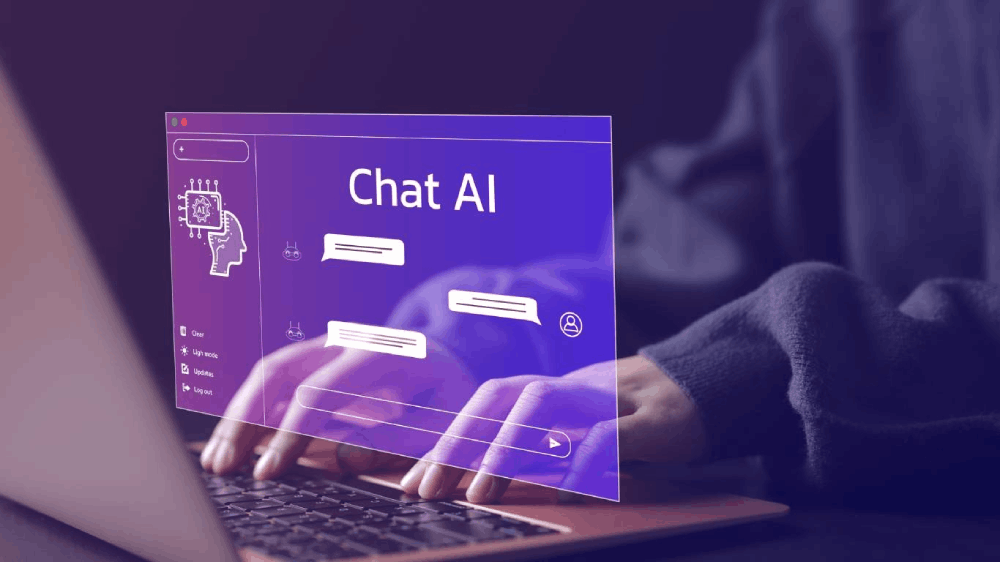
This is the form growing fastest at present, interacting through a chat interface. These tools draw on the power of LLMs to understand complex context, generate detailed content and carry out extensive analysis and synthesis of information.
Unlike a voice assistant, a text assistant prioritises depth of information and analytical ability — suited to tasks that demand complex thinking, such as writing reports, analysing data or advising customers across many turns.
2.3. Virtual assistants supporting business operations
Going beyond the individual, this group of virtual assistants is fine-tuned and integrated deeply by API into internal systems such as CRM, ERP and HRM. Their core role is to turn a staff member’s natural-language request into actions carried out within the system.
This is also the segment where solutions such as T3SKY’s Chatbot Agent AI Spider are establishing themselves — through the ability to automate multi-step processes, connect internal systems and keep business data secure.
2.4. Narrow, industry-specific virtual assistants
These are assistants trained on high-quality, industry-specific data (law, medicine, finance, public administration and so on) to solve very particular operational problems.
This type demands near-absolute accuracy and the ability to cite sources clearly. They are particularly valuable in organisations that must comply with strict regulation and want to shorten the time spent looking things up and making decisions.
3. How does an AI virtual assistant work? A four-step process
Whether interacting by voice or by text, an AI virtual assistant handles a request through four basic steps, all taking place in a fraction of a second.
Step 1: capturing and converting the input
The system receives the request from the user. With a chatbot the incoming data is characters. With a voice assistant, ASR converts the sound wave into text — which means filtering noise and handling intonation, speaking speed and different regional accents.
Step 2: analysing intent and entities
This is the most important step, carried out with natural language processing (NLP). The process has two parts:
- Intent analysis: determining what the user wants — to set an alarm, look something up or carry out a transaction?
- Entity recognition: extracting specific information such as "6am tomorrow", "Hanoi", "500 thousand dong".
NLP also analyses context, keywords and sentence structure in order to decode accurately even requests containing slang or incomplete sentences.
Step 3: determining the response and retrieving the action
Based on the analysis, the system decides what to do:
- If it is a simple lookup → retrieve from the knowledge base or the internet.
- If it is a task to execute → trigger an API or a pre-programmed process.
With modern LLMs, this step also includes natural language generation (NLG) to build an answer that is coherent, conversational and appropriate to the context.
Step 4: responding and learning
The virtual assistant returns the result to the user — as text or as speech (using TTS). More importantly, every interaction is recorded and analysed by the machine learning system, particularly the failures. That data is used to retrain the model continuously, making the assistant steadily more capable.
4. The benefits and impact of AI virtual assistants for business
4.1. Higher productivity and automated operations
The greatest impact lies in the ability to automate repetitive tasks. An AI virtual assistant frees staff from data entry, stock checks and email sorting, while ensuring:
- Continuous operation 24/7, whatever the time zone or holiday.
- Service can scale without a proportional increase in headcount.
- Fewer errors from manual handling, thanks to highly accurate algorithms.
- Staff can concentrate on strategic, creative and decision-making work.
4.2. Personalised experience and better customer service
AI virtual assistants deliver two important benefits for the end customer:
- Instant, omnichannel responses: fast answers through the website, the app, the call centre and social media — resolving most common questions immediately.
- Deep personalisation: analysing behaviour and purchase history to recommend products and offers to the right person at the right moment — driving sales and loyalty.
4.3. Supporting expertise and decision-making
Particularly in fields that demand high accuracy such as law, medicine and finance, AI virtual assistants help specialists look up treatment protocols, review legal documents and check regulatory compliance quickly — indirectly improving the quality of service and the credibility of the organisation.
5. Chatbot Agent AI Spider — a complete AI virtual assistant solution from T3SKY
When it comes to applying AI virtual assistants in Vietnamese businesses, one of the most notable solutions available today is Chatbot Agent AI Spider, developed by T3SKY. Unlike traditional rule-based chatbots, Spider is built on an AI agent foundation — combining LLM, NLP and deep API connectivity — to become a genuine "digital colleague" rather than merely an automated answering tool.
5.1. What problem does Spider solve for a business?
Most Vietnamese businesses deploying a traditional chatbot run into three main problems:
- The chatbot answers mechanically, does not understand context and easily frustrates customers.
- It is hard to integrate with internal systems (CRM, inventory, orders and so on), so staff still have to handle things manually behind the scenes.
- It has no ability to learn and improve itself over time.
Chatbot Agent AI Spider is designed to solve all three, turning the chatbot from an "FAQ tool" into a genuine "virtual employee" that can actually do the work.
5.2. Spider’s standout features
- Accurate understanding of natural Vietnamese: Spider is finely tuned for Vietnamese and handles spoken language, regional words, abbreviations and common spelling mistakes well — the persistent weakness of many international solutions.
- Task execution (agentic): Spider does not only answer but can carry out processes such as looking up an order, booking an appointment, creating a support ticket or sending a quote — connecting directly to the business’s systems by API.
- Unified omnichannel: a single brain serving the website, Facebook Messenger, Zalo OA, Telegram and your own app — customers get a consistent experience at every touchpoint.
- Learning from company knowledge (RAG): Spider lets you load documents, processes, products and FAQs as a knowledge base, so it answers accurately from the company’s own data — without "making things up" as an ordinary LLM chatbot might.
- Intelligent handover to a person: when a situation exceeds its capability or the customer needs in-depth advice, Spider transfers to a colleague along with the full conversation context — the customer does not have to start again.
- Continuous analysis and optimisation: the admin dashboard provides conversation data, resolution rates, drop-off points and questions that were not answered well — helping the business keep improving service quality.
5.3. Who should use Chatbot Agent AI Spider?
Spider suits most business models that need to interact with customers at scale:
- E-commerce and retail: product advice, order lookup, complaint handling, automated upselling.
- Finance, banking and insurance: contract lookup, product advice, preliminary customer identification.
- Education: admissions advice, student care, explaining learning pathways.
- Real estate and services: automated lead filtering, viewing appointments, 24/7 product advice.
- B2B and SaaS businesses: customer onboarding, first-line technical support, gathering requirements.
5.4. Measurable benefits of deploying Spider
Based on real deployment data from T3SKY’s clients, Chatbot Agent AI Spider typically delivers the following results:
- A 50–70% reduction in the repetitive workload of the customer care team.
- Average response time cut from several minutes to a few seconds.
- Higher conversion thanks to 24/7 responses and well-timed advice.
- Significant savings on call centre and customer care operating costs.
- A marked improvement in satisfaction (CSAT) thanks to a seamless experience with no waiting.
T3SKY’s philosophy in building Spider is not "replacing people" but "creating a dependable digital colleague" — handling the repetitive work so that people can concentrate on what really matters: understanding customers and making strategic decisions.
6. Conclusion
The AI virtual assistant has moved past the "experimental technology" stage and is becoming an indispensable part of the digital infrastructure of modern businesses. By automating tasks, personalising the experience and responding 24/7, this technology is reshaping operational performance and service quality across every industry.
To get the most from an AI virtual assistant, however, a business needs to choose a solution designed for the particularities of its market, able to integrate deeply with internal systems and continuously improved. T3SKY’s Chatbot Agent AI Spider is a complete answer to that — combining the power of a modern AI agent with a deep understanding of the market, the language and the business processes of Vietnam.
Get in touch with T3SKY today for in-depth advice, a live demo and a roadmap for deploying Chatbot Agent AI Spider in the way that suits your business best.
