
What is SEO?
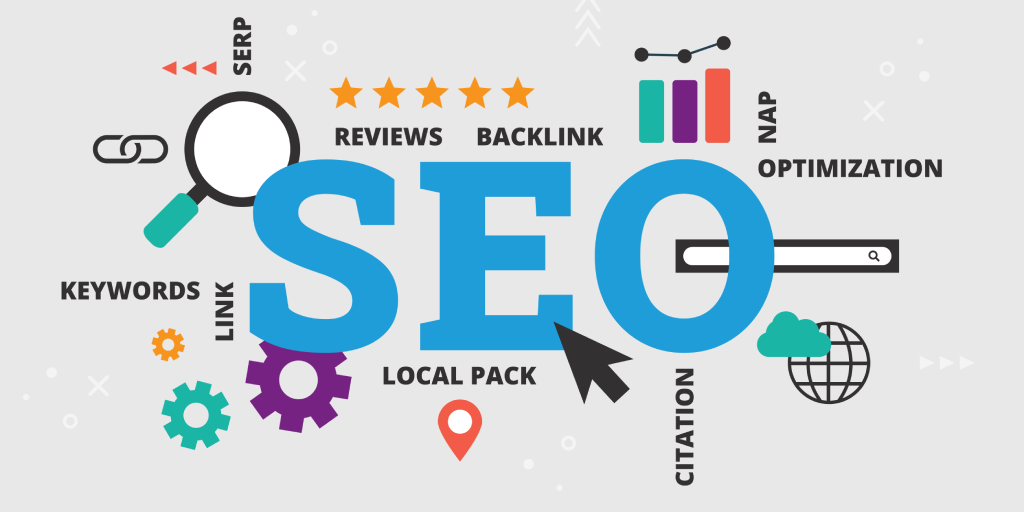
SEO (search engine optimisation) is a set of techniques, strategies and practices applied to improve a website’s position on the search engine results pages (SERP – search engine results page) of Google, Bing and other search engines. The main purpose of SEO is to help your website appear higher – specifically, on the first page – when users search for keywords related to your products, services or content.
SEO is not a technique for deceiving the search engine but a legitimate strategy for making your website easier to understand, more useful and more trustworthy – both for users and for Google’s algorithms.
Why does SEO matter?
Today, when someone needs to find a product or a service, their first move is to open Google and search. If your website does not appear on the first page of the search results, you lose a fairly large opportunity to reach potential customers. Statistics show that more than 90% of users never click on a search result from the second page onwards.
SEO does not only bring you more traffic; it also helps you attract high-quality customers – people genuinely interested in what you provide. When a user searches for a specific keyword, they are showing an intent to buy or to find out, and appearing in front of them can change your whole business.
The main components of SEO
SEO is usually divided into three main components: technical SEO, on-page SEO and off-page SEO.
1. Technical SEO
Technical SEO concerns the technological aspects of a website that affect Google’s ability to crawl and index it. This includes page speed, mobile responsiveness, a clean URL structure, the sitemap, robots.txt and the SSL certificate. A website that is slow, does not display well on mobile or has technical problems will rank lower, however good its content may be.
Google cares a great deal about user experience, so if your website loads quickly, is easy to navigate and works well on every device, Google will favour it.
2. On-Page SEO
On-page SEO concerns the content and the HTML elements of each page. This includes using keywords naturally in the title tag, the meta description, the headings (H1, H2, H3) and the body of the page. On-page SEO also covers optimising images by adding alt text, producing high-quality content and making sure each page focuses on one main topic.
The purpose of on-page SEO is to help Google understand clearly what each page is about, and to help users see quickly whether that page answers their question.
3. Off-Page SEO
Off-page SEO mainly concerns links from other websites to yours (backlinks). When a reputable website links to you, Google treats it as a "vote" for your credibility. Links from relevant, authoritative websites will help your ranking rise.
In addition, activity on social networks, mentions in press articles or positive comments about your brand also count as off-page SEO signals.
An effective SEO strategy
Keyword research
The first step in any SEO strategy is identifying the keywords your potential customers use to search. You need to look for keywords with high search volume but not too much competition. Tools such as Google Keyword Planner, SEMrush or Ahrefs can help you through this process.
Creating high-quality content
Content is the king of SEO. Google likes content that is detailed, accurate, useful and well written. Rather than producing many short articles, create long, comprehensive pieces (pillar content) that deal with a topic completely. Your content should answer the questions people are actually searching for.
Optimising for the user
Google increasingly favours websites with a good user experience. That means your website should load fast, be easy to navigate, carry no intrusive advertising and provide the information users want easily. A website optimised for the user will have a lower bounce rate (fewer users leaving immediately), which will help raise your SEO ranking.
Building quality backlinks
Look for ways to get other reputable websites to link to you. This can be done by writing excellent articles other people want to share, contacting relevant sites and asking for a backlink, or creating valuable resources (such as an infographic, a whitepaper or a toolkit) that people want to reference.
Measurement and adjustment
SEO is not something you set up once; it is a continuous process. You need to track your rankings using Google Search Console, Google Analytics or other SEO tools. Look at which keywords are performing well, which pages have a high bounce rate and what should be improved. Adjust your strategy on the basis of that data.
White hat SEO vs black hat SEO
White hat SEO means practices that follow Google’s guidelines. It focuses on producing high-quality content, improving the user experience and building backlinks legitimately. White hat SEO takes longer but delivers results that last.
Black hat SEO means techniques that breach Google’s guidelines, such as keyword stuffing, cloaking (showing different content to Google and to users) or buying backlinks from spam sites. Black hat SEO can bring quick results, but there is a very real chance your website will be penalised by Google or removed from the search results altogether.
Always use white hat SEO, because it is the only way to build a lasting working relationship with the search engines.
Current SEO trends
Intent-based SEO
Google is getting steadily better at understanding the intent behind each search query. Rather than only matching keywords, you need to understand what the user actually wants and provide content that meets that need.
Core Web Vitals
Google has introduced Core Web Vitals – metrics measuring the user experience on a web page, including loading speed (LCP), layout stability (CLS) and responsiveness (FID). These metrics are now ranking factors.
AI and machine learning
Google is using AI more and more to understand content and rank websites. That means your content needs not only to contain the right keywords but to be genuinely useful, detailed and semantically accurate.
Conclusion
SEO is a long-term investment in your online presence. Rather than relying only on paid advertising (PPC) for traffic, SEO helps you attract free organic traffic from the search engines. Although it takes time to see results, once you achieve a high ranking, traffic and customers keep arriving without continuous advertising spend.
By focusing on high-quality content, technical optimisation, backlink building and understanding user intent, you can build a solid SEO foundation for growing your business in the digital era.
