
What is an AI agent?
An AI agent is an intelligent software system able to perceive its environment, reason, plan and carry out actions automatically in order to reach a specific goal, without a human supervising every step. Unlike an ordinary AI chatbot that only answers questions, an AI agent can use tools, call APIs and handle complex end-to-end processes automatically.
If an AI chatbot is an assistant that only replies when you ask, an AI agent is a proactive assistant able to recognise a problem itself, find a solution and take action without you having to specify every detail.
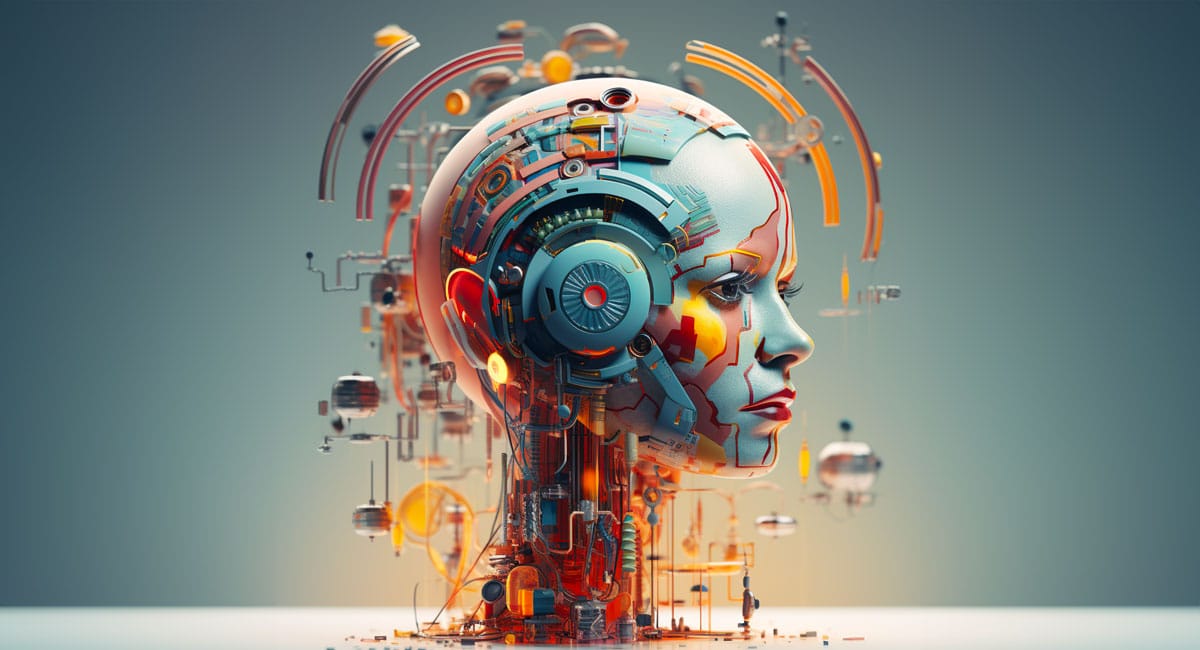
The main characteristics of an AI agent
Autonomy
An AI agent can make its own decisions and carry out the steps needed to complete a task without continuous human intervention. It can judge a situation, plan a course of action and adjust its strategy based on the actual result.
Goal-oriented
Every action an AI agent takes is directed at achieving a particular goal. It does not merely act on command but understands the end purpose and optimises each step to reach it as effectively as possible.
Interaction with its environment
An AI agent continuously takes in data from its surroundings – from email, websites, APIs, databases or other systems – and responds by carrying out appropriate actions. It does not work in isolation but stays connected to the world outside.
Memory and learning
An AI agent can store its activity history, recognise patterns and learn from previous experience in order to improve its performance over time. It does not repeat the same mistakes but grows steadily more capable.
What an AI agent is made of
1. The brain
The brain of an AI agent is usually a large language model (LLM) such as GPT-4 or another advanced AI model. This brain handles reasoning, planning and decision-making from the information it receives.
2. Sensors
Sensors help the AI agent recognise context and gather information from its environment. That may be data from an API, a file, a database or even speech and images. These sensors are the main channel of communication between the AI agent and the outside world.
3. Tools
Tools are the means by which an AI agent takes concrete action. They may be APIs for calling other services, a browser for reaching websites, a calculator for computation or software applications for processing data. Without tools, an AI agent is only a reasoning system with no way to affect the world.
Real examples of AI agents
Virtual assistants
Google Assistant, Siri and Alexa are familiar examples of AI agents. They can recognise your voice, understand your intent and carry out tasks such as making a call, sending a message, searching for information or controlling smart devices around the home.
Customer care AI agents
An AI agent dedicated to customers can look up customer data automatically, answer frequently asked questions, resolve simple problems or even route a complaint to the right department. It works 24/7 without needing staff to manage it.
AI agents automating software development
In engineering, an AI agent can write code from a requirement, run test suites to find bugs and even deploy software to a server. These agents cut development time substantially and let programmers concentrate on more creative work.
How AI agents are changing the way we work
AI agents are changing how we work in a profound way. Instead of a person operating the machine step by step, we can now give an AI agent an instruction and let it complete the work automatically. That not only saves time but reduces errors and lets people concentrate on work that demands creativity, strategy and ethical judgement.
This shift points to a future in which repetitive, tedious or data-heavy work is handed to AI agents, while people focus on what only people can do – generating new ideas, building relationships and making consequential decisions.
Conclusion
The AI agent is not a distant future – it is here now. From the virtual assistant in your phone to complex automation systems inside large enterprises, AI agents are changing how we live and work. By understanding what they are, how they work and what they can do, we can harness their power effectively and take the initiative in this digital era.
