
Vietnam’s e-commerce market is entering a difficult phase of change. While Shopee and TikTok Shop hold nearly 98% of transaction value, the two "giants" have just announced fee rises at the start of May, pushing the cost of each order up to 40-45% of revenue. This is not merely an economic adjustment but a sign of a strategic shift: from a phase of investing to capture market share to a phase of optimising profit.
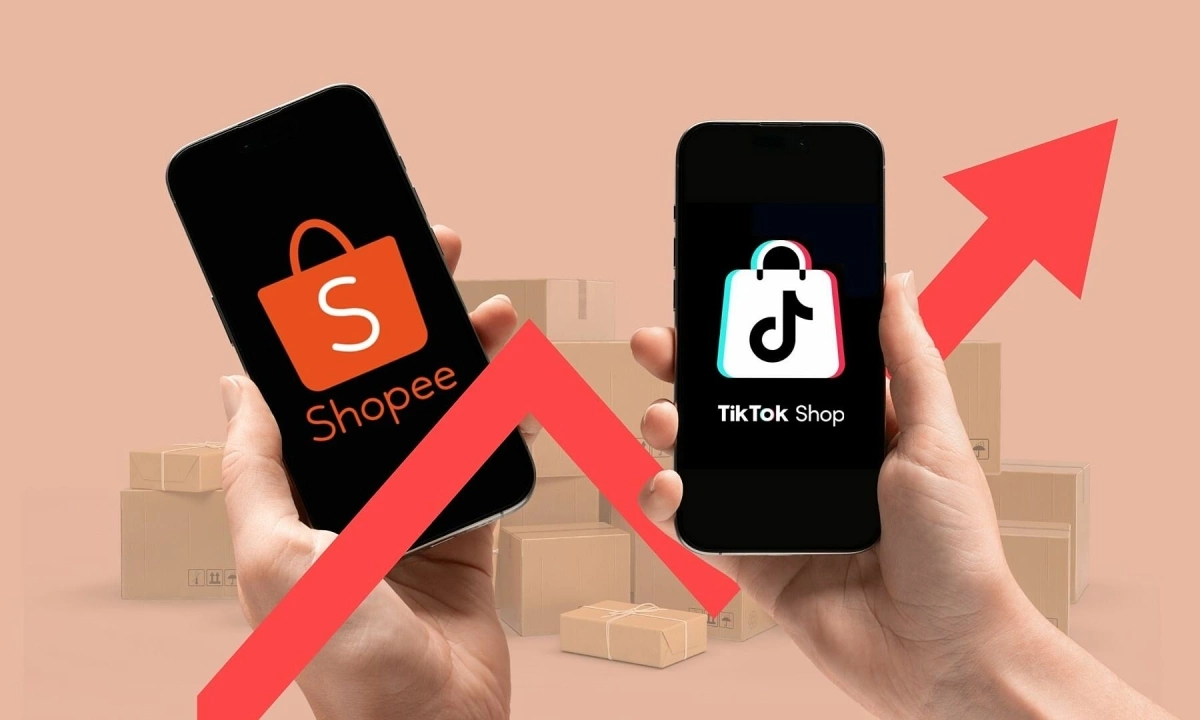
This creates a chilling effect. A whole series of small sellers, particularly those trading in farm produce or reselling (C2C), can no longer compete. According to industry experts, more than 70,000 small sellers have had to leave the market over the past year because they could not withstand the rising costs. The sellers who remain are caught in a position of "no choice": leave Shopee or TikTok Shop and they lose billions of consumers; stay and their profit is squeezed steadily until the business is no longer viable.
The crisis and the opportunity
This crisis, however, opens up opportunities that sellers had no need to notice while the platforms were still "pouring money in" to capture market share. Kieu Tien Anh, chief operating officer of the F2C e-commerce platform Hi1 Thuan Viet, judges that the essence of the fee rise is that the platforms have finished the market-coverage phase. They are now focused on "sustainable operation", that is, on earning profit steadily. What does that mean?
It means that sellers can no longer rely on the platforms for growth. Instead they have to create value themselves and build independently of the platforms. This is not the first time this has happened in the history of e-commerce. Many large sellers in China, faced with a similar situation, developed their own "mini apps", built customer communities on WeChat, or moved to an F2B model (from manufacturer to wholesaler). In Vietnam, this is beginning to happen.
| 98% | 45% | 70K+ |
| Market share of the two big platforms | Maximum cost on TikTok Shop | Sellers who left the platforms last year |
Three strategies for escaping dependence
1. Diversify the sales channels
The basic principle: do not put all your eggs in one basket. Besides Shopee and TikTok Shop, sellers should open other channels such as Tiki, Sendo or Lazada. Margins on these platforms are not high either, but spreading the risk is fundamental. If one platform raises its fees again, you do not fall into the hole.
More importantly, purely Vietnamese domestic platforms such as Tiki or Sendo often have different policies. They may be less inclined to "pass costs on", or may keep fees lower, because they do not yet need to grab market share so greedily. Some newer models such as F2C Hi1 are also emerging with higher margins.
2. Build your own customer base
This is the longest-term strategy but also the most powerful. Rather than waiting on traffic from the platforms, sellers need to bring customers over to their own channels: Zalo, Telegram, a Facebook group, or even their own mobile app (if the scale justifies it).
This tactic starts with small interactions. When a customer buys from Shopee, leave a card with a Zalo number or a QR code linking to a Zalo group. There you can:
- Cut out the middleman – Selling directly rather than through a platform, you keep the whole margin (less a small payment fee for Momo or a bank transfer)
- Create a bond – The customer feels they have a "personal" relationship with the brand, not just an anonymous order
- Forecast stock – Control production and inventory better once you understand demand clearly
- Develop products to fit demand – Customers give feedback directly, so you have first-hand data to improve on
Large sellers such as Sendo and a number of domestic brands have proved this works. They use Zalo to build a community of "loyal" customers, and revenue from that channel reaches 30-50% of total turnover.

3. Tap domestic supply
A fact often overlooked: 70% of the goods sold on the platforms are imported, mainly from China. What does that mean? That the platforms have "monopolised" their own advantage by concentrating on cheap imported goods, forcing Vietnamese sellers to sell "like the Chinese".
Instead, sellers should tap domestic supply. Vietnamese products (textiles, farm produce, technology, handicrafts) carry higher value, better margins and, above all, a competitive monopoly. If you sell coffee from Dak Lak or dresses designed in Hanoi, you do not have to compete with millions of sellers offering "the same cheap item" as on Shopee.
This strategy suits those who want to build a brand for the long term best. You move from being a seller trading on "cheap SKUs" to a seller trading on "a brand". Margins can rise from 5% to 20-30%.
Technology for optimisation
Building independence does not mean abandoning the platforms. It means strategic balance. The platforms remain the main traffic channel, but you need to reduce your dependence on them.
To do this effectively, applying technology is essential. Multi-channel management tools help you:
- Manage inventory across every platform from one dashboard, avoiding overselling
- Automate the syncing of prices, images and product descriptions, saving staff time
- Analyse sales data with AI, forecast demand and adjust stock
- Optimise advertising spend, running ads only on the platforms with good margins
Conclusion: the choice of the moment
The fee rise by Shopee and TikTok Shop is not an incident but the sign of a powerful trend. The large platforms will keep "squeezing profit" because they no longer need further growth – they already hold 98% of the market. Some sellers will endure until there is no other way. Others will act right now.
The steps for shifting strategy are not complicated but they require persistence:
- Start opening more sales channels – This year, get set up on other platforms such as Tiki and Sendo. Do not wait until you are pinned down on Shopee
- Bring customers into Zalo or Facebook – Start small and build step by step. Once you have 1,000-5,000 loyal customers, you have a base of your own
- Find Vietnamese products to sell – If you currently sell only Chinese goods, get in touch with domestic suppliers. Vietnamese goods usually carry margins three to four times higher
- Invest in multi-channel management tools – They need not be expensive, only enough to manage inventory and prices automatically
Now is the best moment to make the change. The seller’s frame of mind – half alarmed, half still thinking it over – is when action can come fastest. Those who wait may find themselves changing again when Shopee or TikTok raises fees once more, and by then it will be too late to build independent channels.
Vietnamese e-commerce will not "die" because of the fee rise. But sellers who take the initiative and build their own systems will fare better than sellers who only wait for the platforms to "forgive" them in future.
